
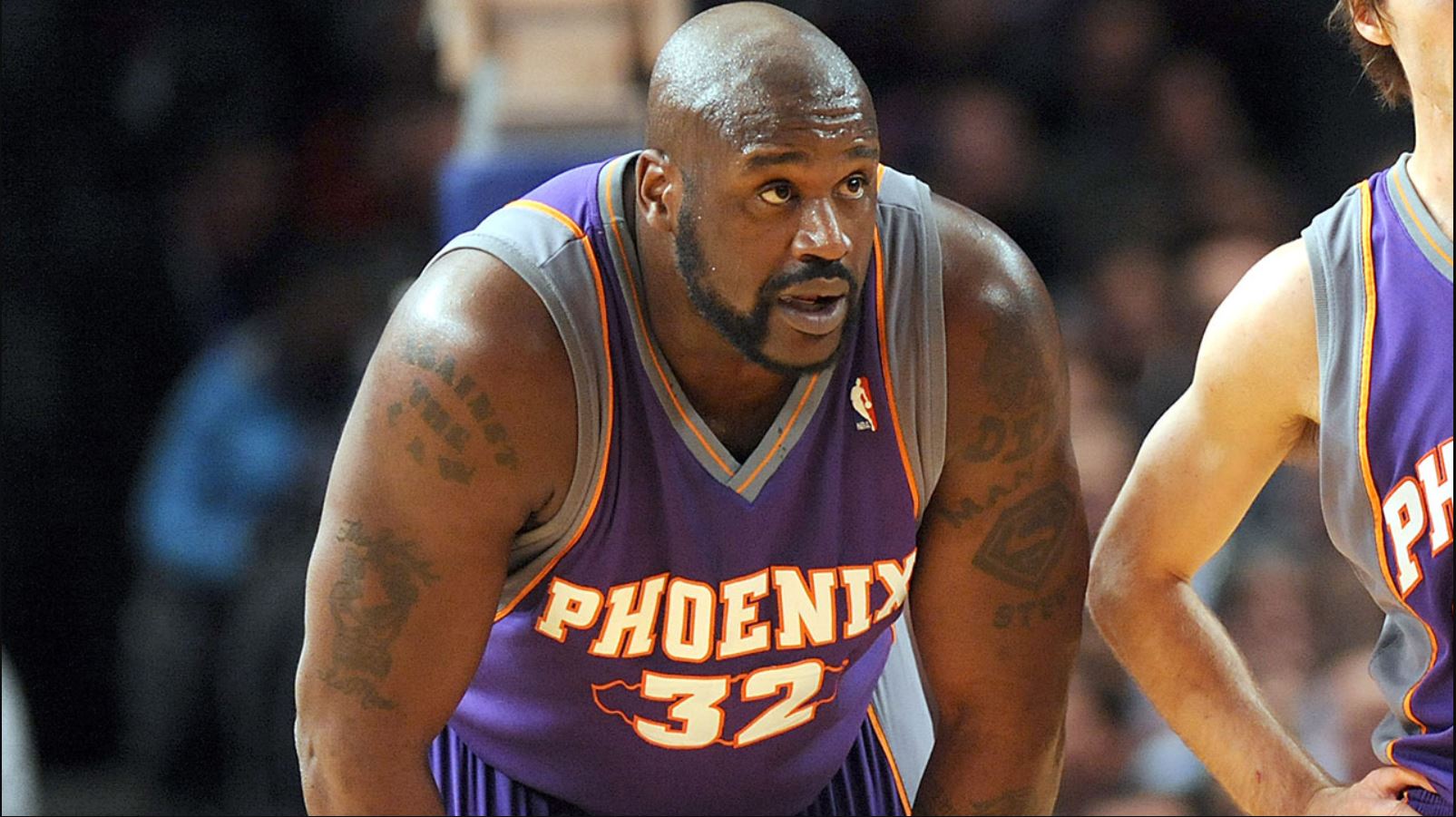
Shaquille O’Neal won four NBA championship rings: three straight with the Los Angeles Lakers from 2000 to 2002 and one with the Miami Heat in 2006. The 7-foot-1, 325-pound Hall of Fame center, drafted first overall by the Orlando Magic in 1992, earned NBA Finals MVP honors in each of his three Lakers titles, cementing his reputation as one of the most dominant forces in basketball history.
Shaq’s four rings place him in elite company among NBA champions, and his title run spanned two iconic franchises. His Lakers three-peat alongside Kobe Bryant defined an era of NBA dominance, while his 2006 championship with Dwyane Wade proved he could win in a new system. If you’re interested in the diverse backgrounds of NBA players, you might also enjoy our blog on How Many Ex NBA Players are Jehovah’s Witnesses, which explores how faith and basketball intersect in the lives of some players.
| Players Name | Shaquille O’Neal |
| How Many Rings does Shaq have | 4 |
| Drafted By | Orlando Magic |
| Won Rings With | 1999-00 Los Angeles Lakers, 2000-01 Los Angeles Lakers, 2001-02 Los Angeles Lakers, 2005-06 Miami Heat |
| Players College | LSU |
| Players Birthday | March 6, 1972 |
| Hometown | Newark, New Jersey |
| Year Drafted | 1992 |
| Round Drafted | 1 |
| Pick Drafted | 1 |
The Laker Years: Shaq’s Three-Peat with Kobe Bryant
Between 1999 and 2002, Shaquille O’Neal anchored one of the most dominant runs in NBA history. Paired with Kobe Bryant under coach Phil Jackson’s triangle offense, Shaq turned the Los Angeles Lakers into a dynasty, winning three consecutive NBA championships and earning Finals MVP honors in each of those seasons.
The three-peat began in the 1999-2000 season, when Shaq captured both the regular-season MVP and the Finals MVP award. Against the Indiana Pacers in the NBA Finals, he averaged 38 points and nearly 17 rebounds per game, powering the Lakers to a six-game series win and the franchise’s first title since 1988.
The 2000-01 campaign was even more emphatic. The Lakers swept the Western Conference playoffs and finished with a 15-1 postseason record, still one of the best marks in league history. They swept the Philadelphia 76ers in the Finals, with Shaq once again taking home Finals MVP while averaging more than 33 points per game in the series.
In the 2001-02 season, Shaq led the Lakers past the New Jersey Nets in a four-game Finals sweep, completing the three-peat. He won his third straight Finals MVP, becoming the first player since Michael Jordan to accomplish that feat. At his peak, Shaq was nearly unstoppable in the paint, using his 7-foot-1, 325-pound frame to overpower defenders, dominate the glass, and alter shots on defense.
That three-year stretch cemented Shaq’s legacy as one of the greatest centers ever to play, and it set the stage for the next chapter of his championship journey in Miami.
1. 2000 Los Angeles Lakers NBA Basketball World Championship Ring
The 1999-2000 season was the peak of Shaq’s regular-season dominance. He powered the Lakers to a 67-15 record, captured the NBA scoring title with 29.7 points per game, and earned his only league MVP award. With 13.6 rebounds and 3.0 blocks per game, he was the most imposing two-way force in basketball.
Shaq saved his best for the NBA Finals against the Indiana Pacers. He averaged 38 points and 16.7 rebounds across the six-game series, including a 41-point, 12-rebound masterpiece in the clinching Game 6. That performance earned him the first of three consecutive Finals MVP trophies.
The season left no doubt that Shaq belonged in the conversation among the best NBA players of his era. He was voted to the All-NBA First Team and the NBA All-Defensive Second Team, and his blend of size, power, and surprising agility made him a matchup nightmare no defense could solve.
2. 2001 Los Angeles Lakers NBA Basketball World Championship Ring
Shaquille O’Neal’s second ring arrived during the 2000-01 season, when the Lakers turned in one of the most dominant playoff runs in NBA history. Los Angeles stormed through the postseason with a 15-1 record, sweeping the Portland Trail Blazers, Sacramento Kings, and San Antonio Spurs before meeting the Philadelphia 76ers in the Finals.
The championship series proved tougher than that sweep-heavy path suggested. Allen Iverson stunned the Lakers with 48 points in Game 1 to steal an overtime victory, but Shaq and company answered by winning the next four games. O’Neal averaged 33.0 points and 15.8 rebounds per game against the 76ers, overpowering Dikembe Mutombo — the league’s reigning Defensive Player of the Year — in the paint throughout the series.
That performance earned Shaq his second consecutive Finals MVP award, making him the first player to win the honor in back-to-back years since Michael Jordan. He also repeated as a member of the All-NBA First Team and the NBA All-Defensive Second Team, cementing his status as the league’s most dominant two-way force at center.
The 2001 ring validated that the Lakers’ first title was no fluke. With Shaq anchoring the middle and Kobe Bryant emerging as a legitimate co-star, Los Angeles looked less like a one-hit wonder and more like a dynasty in the making.
3. 2002 Los Angeles Lakers NBA Basketball World Championship Ring
The 2001-02 campaign completed one of the most dominant three-year stretches in NBA history. The Lakers posted a 58-24 regular-season record, then stormed through the Western Conference playoffs before meeting the New Jersey Nets in the NBA Finals.
That Finals series was a mismatch from the opening tip. Los Angeles swept New Jersey in four straight games, and Shaq was the primary reason. He averaged 36.3 points and 12.3 rebounds per Finals game, overpowering a Nets frontcourt that simply had no answer for his combination of size and footwork.
With that performance, Shaq collected his third consecutive Finals MVP award — a feat only a handful of players in league history have matched. He also earned All-NBA First Team honors for the season, cementing his status as the league’s most dominant center of his generation.
The 2002 title completed the Lakers’ three-peat, a run that defined the early 2000s and solidified Shaq’s place among the greatest winners in basketball history.
4. 2006 Miami Heat NBA Basketball World Championship Ring
The 2005–06 season was the payoff for the Miami Heat’s bold decision to acquire Shaq in 2004. The franchise won 52 games in the regular season and then ground through a demanding Eastern Conference playoff bracket, with Shaq and a young Dwyane Wade carrying the scoring load through every round.
In the NBA Finals, Miami faced the Dallas Mavericks and dropped the first two games before storming back to win four straight and capture the title. Wade delivered a historic series, averaging 34.7 points per game to earn Finals MVP, while Shaq posted a steady double-double and commanded constant double-teams in the paint. That defensive attention opened driving lanes for Wade and Miami’s shooters, and Shaq’s veteran presence kept the team composed during the comeback. The victory gave Shaq his fourth NBA championship ring and his first outside Los Angeles, proving he could win alongside a second superstar in a new city.
Shaq’s Fourth Ring: The Miami Heat Partnership with Dwyane Wade
Shaquille O’Neal added a fourth championship ring in 2006, not in Los Angeles but in Miami. After three straight titles with the Lakers, Shaq was traded to the Miami Heat in 2004, pairing him with a young Dwyane Wade and turning the Heat into immediate championship contenders.
The Shaq-Wade partnership worked because their games fit together. Shaq anchored the paint with his size and power, drawing double-teams and creating open looks for his teammates. Wade attacked the rim with speed and finishing ability, giving Miami a dynamic one-two punch that opposing defenses struggled to handle.
That chemistry peaked in the 2006 NBA Finals against the Dallas Mavericks. Wade earned Finals MVP honors, but Shaq’s presence, leadership, and ability to command attention in the post were critical to the Heat winning the series and securing Shaq’s fourth ring.
How Many Rings Does Shaq Have Compared to Other NBA Legends?
Shaquille O’Neal won four NBA championships with two different franchises—three alongside Kobe Bryant in Los Angeles and one with Dwyane Wade in Miami. That total places him in elite company, though two contemporaries from his era, Kobe Bryant and Tim Duncan, finished their careers with five rings apiece.
Shaq’s Four Rings vs. Other Hall of Fame Big Men
Among the dominant big men who defined the late 1990s and 2000s, Shaq’s four championship rings rank near the top of the list:
- Tim Duncan — 5 rings: All five came with the San Antonio Spurs, giving Duncan the most championships of any big man from Shaq’s era.
- Shaquille O’Neal — 4 rings: Three with the Lakers (2000, 2001, 2002) and one with the Heat (2006), earning Finals MVP honors in each of his first three wins.
- Hakeem Olajuwon — 2 rings: Back-to-back titles with the Houston Rockets in 1994 and 1995, including a Finals sweep over Shaq’s Orlando Magic.
- David Robinson — 2 rings: Both with the Spurs, in 1999 and 2003, the second coming after Duncan had taken over as the team’s anchor.
- Kevin Garnett — 1 ring: A single title with the Boston Celtics in 2008.
- Dirk Nowitzki — 1 ring: One championship with the Dallas Mavericks in 2011, defeating the Heat in the Finals.
What separates Shaq is not just the ring count but the dominance of his three-peat. Only Michael Jordan and Shaquille O’Neal have ever won three consecutive Finals MVP awards, a feat that underscores how completely Shaq controlled the postseason during the Lakers’ run.
The Championships That Got Away
Shaq’s career also included several deep playoff runs that stopped short of a title, and fans have long debated how many more rings he could have claimed:
- 1995 Finals: Shaq’s Orlando Magic were swept by Hakeem Olajuwon and the Houston Rockets, a series that cemented the rivalry between the two dominant centers.
- 2004 Finals: The star-studded Lakers, featuring Shaq and Kobe, were upset by the Detroit Pistons in five games—a loss that hastened Shaq’s trade to Miami that summer.
- 2009 Playoffs: Shaq’s Phoenix Suns were eliminated by the Lakers in the first round of the Western Conference playoffs, not the Finals as is sometimes misremembered. Shaq was traded to Cleveland before the 2009-10 season.
Had one or two of those series gone differently, Shaq could easily have finished with five or six rings. Even so, his four championships and three Finals MVP trophies place him firmly among the most decorated centers in NBA history.
Shaquille O’Neal’s Lasting Impact on the NBA and the Center Position
Shaquille O’Neal’s influence on professional basketball extends far beyond his four championship rings and three Finals MVP trophies. From his dominant early seasons with the Orlando Magic to his iconic partnerships with Kobe Bryant in Los Angeles and Dwyane Wade in Miami, Shaq redefined what was possible for a player of his immense size.
How Shaq Transformed the Center Position
Before Shaq, the NBA had never seen a 7-foot-1, 325-pound athlete move with such devastating speed and coordination. He didn’t just occupy the paint—he controlled it, altering opponents’ shot attempts and forcing teams to completely redesign their defensive schemes around him. His blend of raw power and surprising finesse made him nearly impossible to guard one-on-one, and his presence alone changed how coaches approached the low post.
His 2000 MVP season remains one of the most dominant single-year performances by a center in league history, and his three consecutive Finals MVP awards with the Lakers from 2000 to 2002 placed him in an elite class of champions.
More Than a Basketball Player: Shaq’s Cultural Footprint
What truly set Shaq apart was his larger-than-life personality. He broke backboards with thunderous dunks, starred in Hollywood films, released rap albums, and became one of the most recognizable athletes on the planet. He understood that being a superstar meant entertaining fans both on and off the court, and he embraced that role with unmatched charisma.
Leadership and the Will to Win
Beyond the statistics and the trophies, Shaq elevated everyone around him. His leadership style was demanding but effective—he held teammates accountable while creating a winning culture wherever he played. His ability to draw double-teams opened up opportunities for guards like Kobe Bryant and Dwyane Wade, and his veteran presence in the locker room proved invaluable to young teams finding their identity.
Shaq’s Legacy: A Hall of Fame Career That Changed the Game
Inducted into the Naismith Memorial Basketball Hall of Fame in 2016, Shaq’s legacy is measured in more than just wins. He inspired a generation of big men to develop their athleticism and skill rather than relying solely on size. His four championships with two different franchises, his 15 All-Star selections, and his unforgettable Finals performances cement his place among the greatest players ever to play the game.
For fans and future players alike, Shaq’s career serves as a reminder that dominance, personality, and leadership can coexist at the highest level. He didn’t just win rings—he changed how the NBA views the center position and left a blueprint for success that continues to influence the league today.