
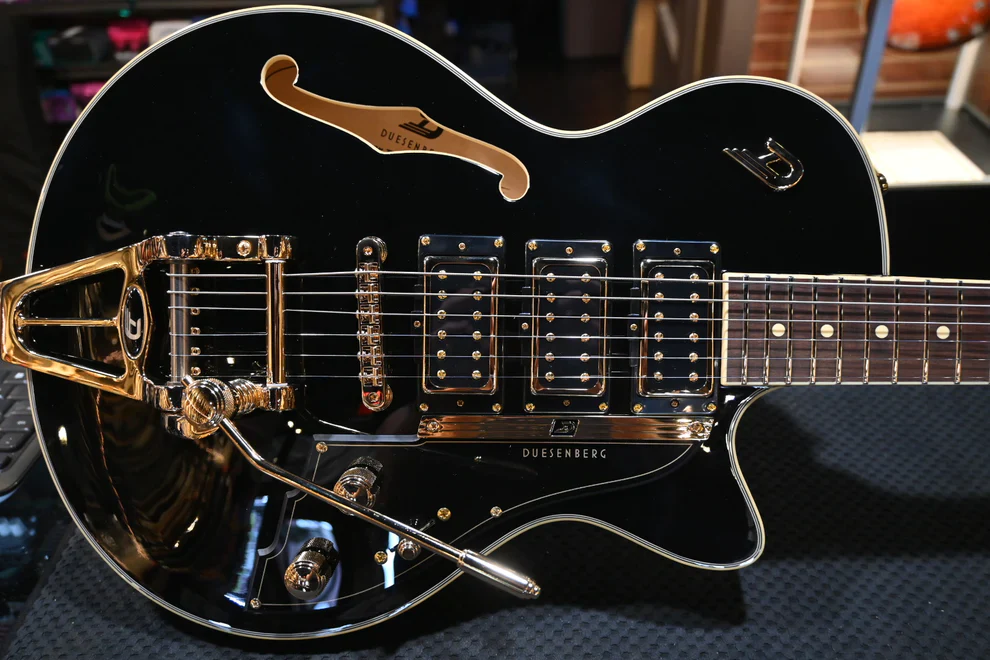
Caparison guitars are premium Japanese-built electric instruments crafted for professional metal, progressive, and hard rock players who demand precision playability and a distinctive sonic voice. Produced in limited numbers with hand-finished detailing and high-output pickup systems, these boutique guitars have earned a devoted following among touring and studio musicians who refuse to compromise on tone, comfort, or construction quality.
Distinctive Design Philosophy
Caparison guitars stand apart from mass-produced instruments through a design language that balances sculpted body contours, distinctive headstocks, and carefully positioned hardware—each element serving both visual identity and technical playability. The Horus and Dellinger series capture this philosophy best, pairing aggressive silhouettes with ergonomic details that working musicians notice within the first few minutes of playing.
Form follows function in Caparison’s approach. Neck profiles are shaped specifically for technical playing, with slim, fast contours that keep the hand relaxed during extended runs and provide clean access to the upper register. The neck construction remains stable under heavy string tension, so intonation and setup hold up through demanding performance schedules and frequent tuning changes.
Ergonomics extend well beyond the neck. Weight distribution is engineered so the guitar sits naturally whether you’re standing or seated, reducing fatigue during long sets and studio sessions. Body contours allow the picking hand to rest in a neutral position, while the hardware layout keeps volume and tone controls within easy reach without interfering with aggressive playing.
The payoff is playability that survives real-world conditions. From the bridge design and tuning stability to the resonance carried through the body, every specification is tuned for guitarists who need an instrument that responds precisely and sustains with authority. The result is a guitar that feels as distinctive as it looks—built for players who treat their instrument as an extension of their technique rather than a production-line compromise.
Caparison Guitar Tone: High-Output Pickups and Versatile Sound
Caparison guitars deliver a distinctive sonic signature built around high-output humbuckers, extended sustain, and articulate note clarity—without the sterile, processed character that defines many modern high-performance instruments. This tonal architecture is engineered for metal, progressive, and hard rock players who need versatility across gain levels while keeping their guitar tone musical and expressive.
High-Output Humbuckers for Definition and Harmonic Richness
Caparison’s pickup configurations form the foundation of its sound. These high-output humbuckers provide the gain and compression needed for tight rhythm playing, while retaining enough dynamic range for complex chordal voicings and lead lines. The harmonic richness and sustain these pickups produce make them especially well suited to emotional soloing and long, singing notes that need to cut through a dense mix without becoming harsh or brittle.
Warmth and Precision: The Caparison Tonal Balance
What sets Caparison guitars apart from other high-performance instruments is their refusal to sacrifice musical warmth for technical precision. While many competitors push toward clinical, sterile perfection, Caparison models retain a natural, organic character that sits comfortably in a mix. This balance makes them equally effective in studio recording, where clarity and definition are critical, and live performances, where muscular projection and tonal weight matter most.
Versatility for Studio, Stage, and Genre Flexibility
The practical result is a guitar that adapts to virtually any musical situation without requiring a pedalboard overhaul or a backup instrument. Players can rely on a single Caparison to handle:
– High-gain metal rhythm with tight low-end response and palm-mute clarity
– Progressive rock lead work with singing sustain and dynamic articulation
– Clean and semi-clean tones with dimensional, defined voicing
– Studio sessions demanding low noise, clinical separation, and consistent output
For recording guitarists, the pickups offer precise note separation and minimal noise. On stage, the same configuration delivers the headroom and projection needed to fill a room while preserving the tonal warmth that keeps performances musical rather than mechanical.
Japanese Craftsmanship: Precision Engineering in Every Caparison Guitar
Caparison guitars are built in Japan, a country with a worldwide reputation for precision manufacturing that extends naturally into luthiery. That heritage shapes every stage of production, from the initial neck carve to the final polish, and it is the reason these instruments deliver such consistent performance under the demands of touring and studio work.
What Japanese Craftsmanship Means for Players
The practical benefits of this precision-first approach show up in details that serious guitarists notice immediately:
– Fretwork: Frets are leveled, crowned, and dressed to exacting tolerances, producing low action without fret buzz and smooth bending across the entire neck.
– Finish application: Multiple coats are applied and cured carefully, creating a durable surface that protects the wood and allows the instrument to resonate freely rather than feeling choked by excessive finish.
– Electronics installation: Pickups, switches, and output jacks are wired cleanly and shielded properly, minimizing noise and ensuring reliable signal transfer night after night.
Consistency That Professionals Rely On
For working musicians, consistency is not a luxury—it is a necessity. A guitar that plays differently from one show to the next, or one that develops fret sprout or finish issues after a few months on the road, becomes a liability. The tight quality control in Japanese guitar manufacturing means each Caparison model leaves the workshop performing to the same standard, so a player can switch between instruments or replace a touring guitar without relearning its quirks.
The Craftsmanship–Tone Connection
Precision is not just about feel; it directly shapes tone. A properly seated neck joint maximizes energy transfer from the strings through the body, supporting the sustain and harmonic richness that Caparison instruments are known for. Clean fretwork and accurate intonation ensure that chords ring true across the register, while careful electronics installation preserves the clarity of high-output pickups even at high gain. In short, the build quality is the foundation upon which the brand’s distinctive sonic character is built.
Signature Series: Artist-Driven Innovation
Caparison’s signature series is where artist input meets Japanese precision. These models are developed alongside professional musicians such as Michael Romeo, Courtney Cox, Joel Stroetzel, and Adam Dutkiewicz, ensuring every specification serves a real-world playing style rather than a marketing concept.
Artist Collaborations That Shape Real Specifications
Unlike many signature guitars that only change cosmetics, Caparison reworks core components. The artists involved help define neck profiles, pickup voicings, hardware choices, and finish options. The result is an instrument that responds predictably on stage and in the studio, whether you’re playing tight rhythm parts or long, sustained leads.
The Investment Value Proposition
Caparison guitars carry premium prices, but they also hold value better than many mass-produced alternatives. Limited production runs and Japanese craftsmanship contribute to strong resale demand among serious guitarists. More importantly, the playing experience itself can support creative growth and technical development.
A current example is the 2022 Horus-WB-FX EF offered at Eddie’s Guitars at a substantial discount from its original price. That kind of opportunity makes high-end Japanese instruments more accessible to passionate players who want superior tools for musical expression.
Beyond Specifications: The Musical Connection
The qualities that set a Caparison guitar apart rarely appear on a spec sheet. From the first chord, the instrument responds with an immediacy that turns technical exercises into musical statements. Players who have spent years chasing the right feel recognize it instantly: a neck that sits naturally in the hand, pickups that articulate every picking dynamic, and a resonance that carries through both clean passages and high-gain riffs.
What Players Notice First
Ask most Caparison owners what drew them to the brand and the answers cluster around the same few experiences:
- Upper-fret access that lets lead lines flow without fighting the body
- A balanced output that keeps complex chords clear while still pushing an amp into natural saturation
- Consistent intonation and setup stability, even across temperature shifts on tour
- Weight distribution that stays comfortable through a full set
These are not cosmetic upgrades. They are design decisions shaped by working musicians who demanded an instrument that disappears in the hands and leaves only the music.
The Creative Feedback Loop
An instrument that responds predictably does more than sound good—it changes how you write. When every note feels intentional and every harmonic rings true, improvisation becomes less about hunting for sounds and more about following ideas to their natural conclusion. That feedback loop, where the guitar answers your playing with inspiring clarity, is what keeps Caparison instruments in the hands of touring professionals and serious home players alike.
For guitarists who view their instrument as a creative partner rather than a tool, the value of a Caparison extends far beyond premium woods and hardware. It offers the rare combination of a precise, reliable instrument that still feels alive—a pairing that turns practice sessions into the kind of musical exploration that reshapes what you thought was possible.